Community
Microsoft says services fully restored after hourslong global outage
By Maria Gomez
Advertisement · Why this ad?
Maria Gomez has over 15 years of experience in local journalism, having previously served as the editor for the Hempstead Herald and a contributor to Newsday. She graduated from Long Island University with a degree in Journalism and has a passion for engaging with the diverse voices of Garden City. Maria believes that community journalism plays a crucial role in shaping local identity.
More from Maria →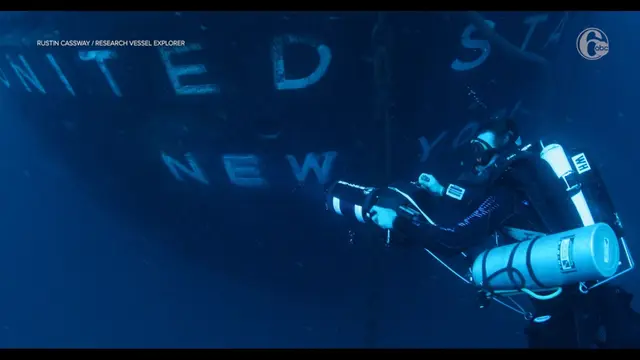
It was just epic: Cape May diver among first to explore SS United States after historic sinking
Rustin Cassway, a diver from Cape May, New Jersey, was one of the first to explore the SS United States after it was sunk off the coast of Florida to become an artificial reef. Cassway described his experience as 'just epic,' noting that the ship was in excellent condition, with a clean interior that allowed for clear underwater photography.
The SS United States, once the pinnacle of transatlantic travel and a symbol of American ingenuity, has concluded its remarkable journey. For nearly three decades, it sat docked along Philadelphia's Delaware River waterfront, a silent giant witnessing the passage of time. Before that, it served as a vital lifeline between the United States and Europe, carrying passengers and cargo across the Atlantic. Its history is interwoven with significant moments in American history - it was even secretly converted to a troop transport during the Cuban Missile Crisis, showcasing its versatility and strategic importance. The ship’s legacy extends beyond its practical function, representing a golden age of ocean travel and a testament to American engineering prowess.
Launched in 1952, the SS United States was more than just a luxurious liner; it was a technological marvel. It held the coveted Blue Riband for the fastest transatlantic crossing, a title it fiercely defended. Its design incorporated groundbreaking features, including a revolutionary hull shape that reduced drag and increased speed, and advanced turbine engines that generated immense power. The ship’s construction involved over 3,000 workers in Virginia, highlighting the significant economic impact it had on the region. Famous passengers included Hollywood stars like Grace Kelly and Elizabeth Taylor. Other notable travelers included Presidents Harry Truman, Dwight Eisenhower, and John F. Kennedy, as well as Britain’s former King Edward VIII. The ship's interiors were equally impressive, offering passengers opulent dining rooms, elegant lounges, and comfortable staterooms—dinners included caviar, roast duckling, smoked ox tongue and Calf’s Head en Tortue.
The SS United States held the coveted Blue Riband for the fastest transatlantic crossing, a title it fiercely defended. Its design incorporated groundbreaking features, including a revolutionary hull shape that reduced drag and increased speed, and advanced turbine engines that generated immense power.
Launched in 1952, the SS United States held the Blue Riband for the fastest transatlantic crossing. It was secretly converted to a troop transport during the Cuban Missile Crisis. The ship was sunk off the coast of Florida in 2024 to become an artificial reef.
The historic ocean liner, once the fastest ship on the seas, made its final voyage on Wednesday night and was deliberately sunk to the bottom of the Gulf of Mexico. The $13.5 million project aimed to create a new home for marine life and attract divers from around the world. The sinking process began with hours of preparation. Crews filled 128 fuel and lubricant tanks aboard the ship with water to ensure it would rest evenly on the ocean floor. The 65-foot smokestacks were removed to anchor a new museum celebrating the ship’s legacy. Explosives were not used due to Federal environmental and explosives rules.
The decision to sink the SS United States wasn't taken lightly. Numerous restoration plans were attempted over the years, but ultimately proved financially unviable. The ship's size and condition made it too costly to maintain or refit. Sinking the vessel as an artificial reef presented a unique opportunity to give it a new purpose, transforming a symbol of a bygone era into a thriving marine habitat. The project involved extensive environmental impact assessments and coordination with various agencies to ensure the process was carried out responsibly and safely. The selection of the sinking location, approximately 25 miles southwest of Destin, Florida, was carefully considered to maximize its benefits for marine life and divers while minimizing any potential impact on sensitive ecosystems.
The controlled sinking took longer than expected, with the process taking several hours. Rustin Cassway and his team of divers witnessed the historic event, capturing breathtaking video of the ship as it slowly tilted and then submerged. The 65-foot smokestacks were removed to anchor a new museum celebrating the ship’s legacy. The ship was expected to sink in about 55 meters of water, with its top deck about 18 meters below the surface.
Local divers and enthusiasts were excited about the new artificial reef. Rustin Cassway said he expected the SS United States to attract divers from around the world. 'I would say that it's a really good deal for everybody, and very well executed,' he added.
Brandon Longo, a reporter from WPVI, described the sinking as a “long goodbye.” The event drew spectators from across the country, with many expressing their sentiments on social media. One diver, Rustin Cassway, shared his experience:
“I looked at this beautiful ship every time I crossed the Delaware River,” Cassway said. “It was just epic. It was very cleaned up. I mean, you could see people really took their time to clean it really nicely.”
While some residents of Cape May were excited to see the SS United States in its new home, others had concerns about the environmental impact. However, officials assured the public that the process was carefully planned to minimize disruption to marine life. The project's success will depend on its ability to provide a stable and thriving habitat for marine species, attracting divers and boosting local tourism.
The creation of the SS United States artificial reef is expected to have a significant positive economic impact on the region. The influx of divers and fishing enthusiasts will generate revenue for local businesses, including dive shops, charter boats, and restaurants. The reef will also create new job opportunities in the tourism and hospitality sectors. The project aligns with Okaloosa County's strategy to promote sustainable tourism and enhance its reputation as a premier diving destination.
Now that the SS United States has been sunk, the next step is to monitor its impact on the local ecosystem and attract divers and fishing enthusiasts. Rustin Cassway expects the artificial reef to become a popular destination for divers from around the world. The ship’s legacy will continue to inspire future generations, serving as a reminder of America’s technological achievements and maritime heritage.
‘It is a new life, and there's a lot of amazing, amazing life in the Gulf,’ Cassway said. ‘I would say that it's a really good deal for everybody, and very well executed. The fact that it's standing up straight is just amazing.’
Over time, the SS United States will become encrusted with coral and other marine organisms, transforming it into a vibrant underwater ecosystem. The ship's structure will provide shelter and breeding grounds for a variety of fish species, including tuna, marlin, and swordfish. Scientists and marine biologists will monitor the reef's development and assess its impact on the local marine environment. The project offers a unique opportunity to study the long-term effects of artificial reefs on marine biodiversity and ecosystem health.
‘It is a new life, and there's a lot of amazing, amazing life in the Gulf,’ Cassway said. ‘I would say that it's a really good deal for everybody, and very well executed. The fact that it's standing up straight is just amazing.’
Port Washington, New York
Community
Saturday, November 14, 2026
6 min
By Maria Gomez

By Maria Gomez

By Maria Gomez
By Maria Gomez